This case study is password protected


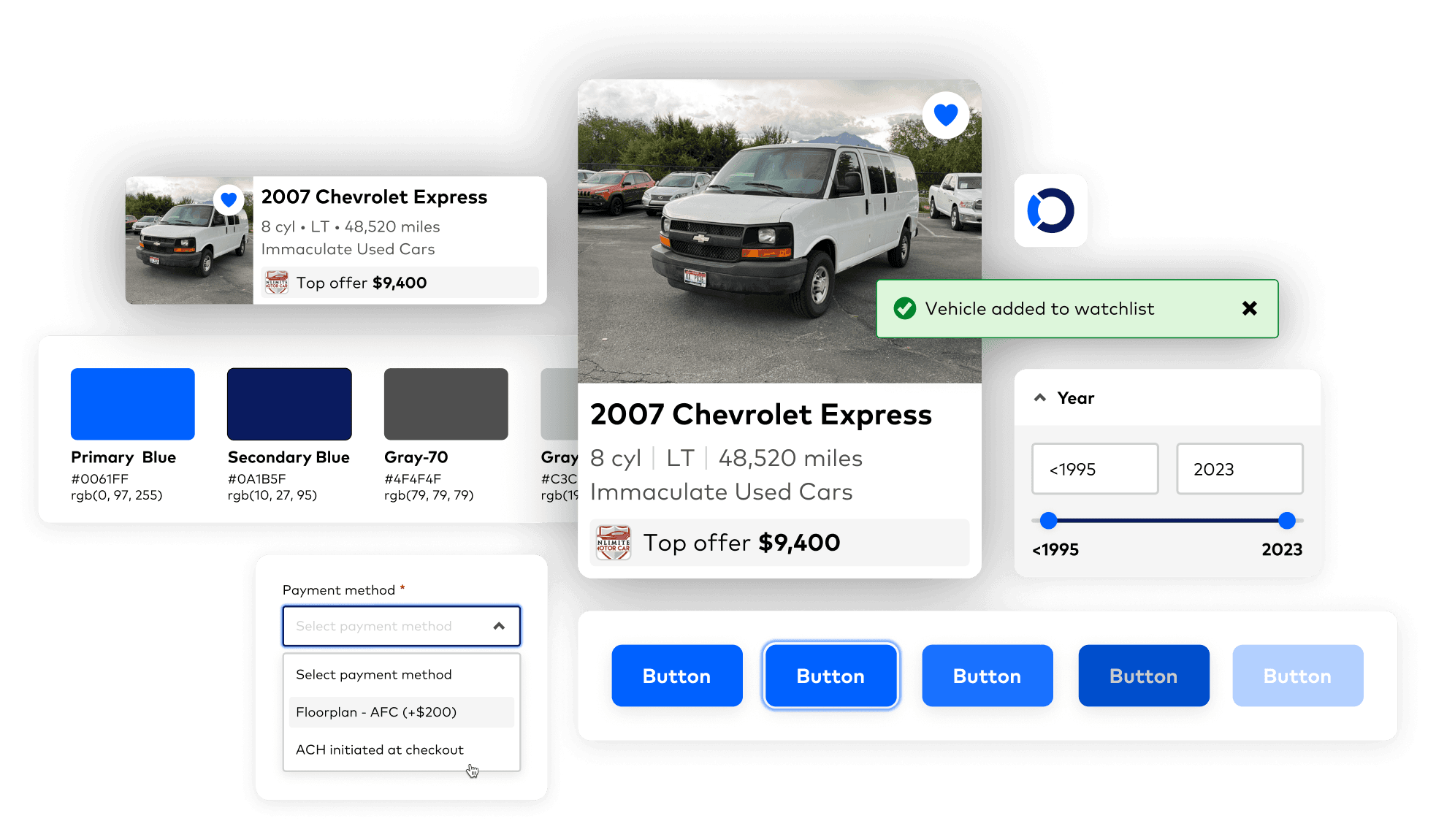
Context
I joined BacklotCars in April 2023, just weeks before parent company KAR Global announced a major rebrand to OPENLANE. BacklotCars was a digital platform where car dealerships could auction and trade wholesale used vehicles—and now, every aspect of the product needed to reflect a new unified brand.
Over the next six months, I worked alongside two other UX/UI designers to completely rebuild the design system, using the rebrand as an opportunity to improve accessibility, consistency, and usability across the platform.
Timeline
May - October 2023
My Role
Tools
Figma, Figjam
Team
Two other UX/UI Designers, Development
01
Discovery
Product and system audit
As the newest member of the BacklotCars design team, I was in a unique position to evaluate the product and existing design system as an outside observer.
I started out by auditing the web app and native mobile apps (iOS and Android) and the existing design system documentation. I noted areas where design system optimization could improve both our design team's workflow and the end product.
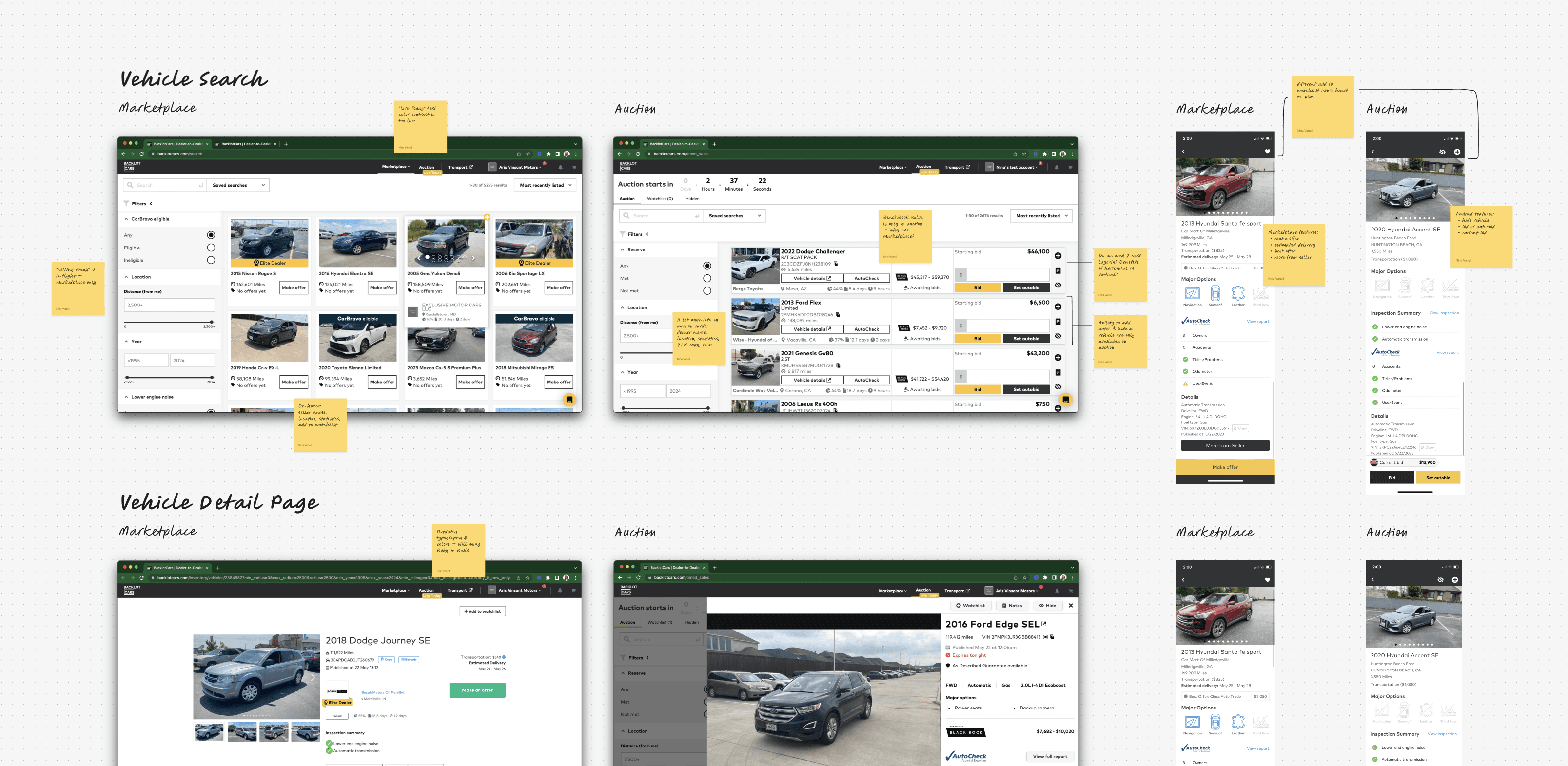
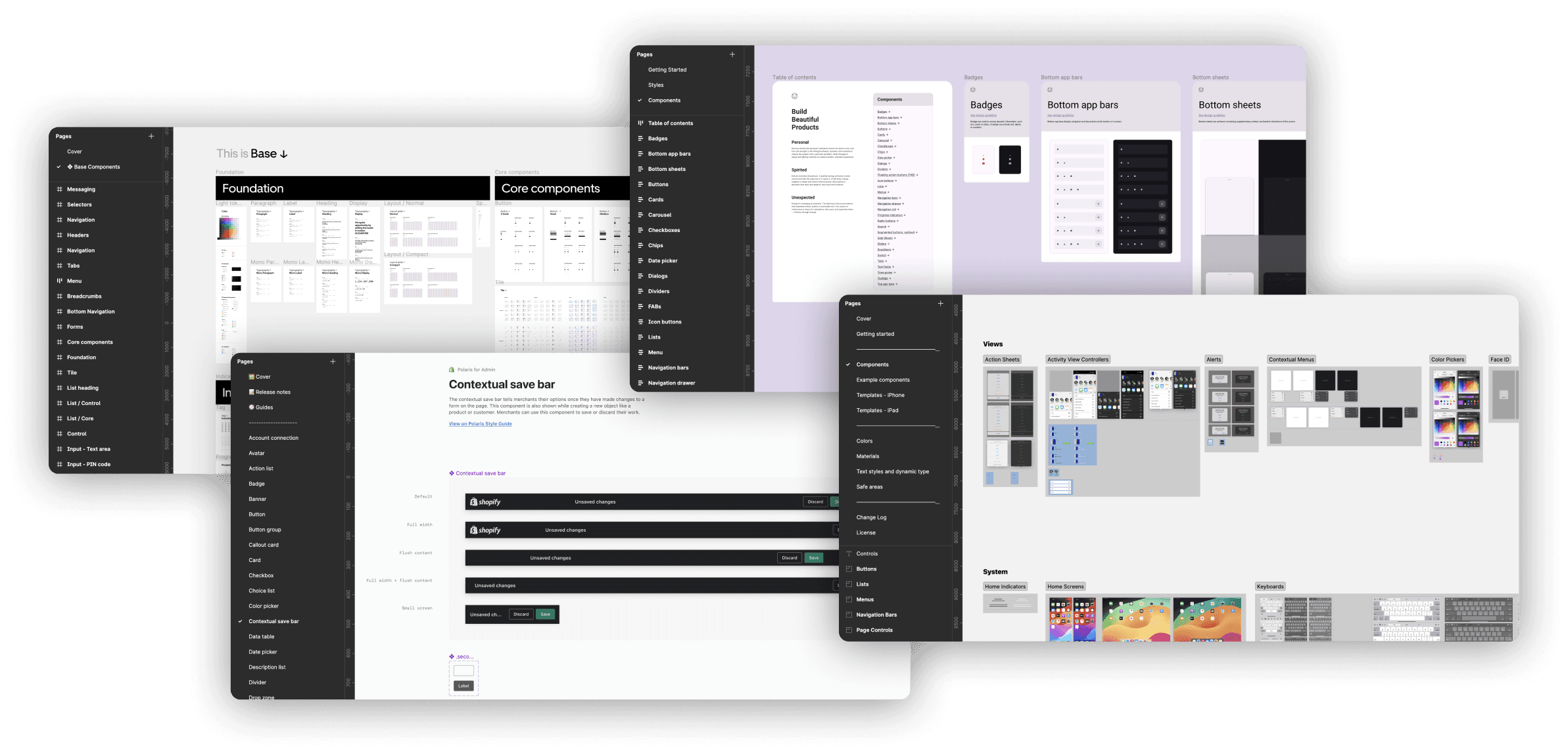
Design system research
Despite years of experience using and contributing to established systems, this was my first opportunity to rethink how a design system was built from the ground up. I spent time exploring ways we could optimize everything from our file setup to component structure.
I sought inspiration from influential design systems, including Uber Base, Google Material, Shopify Polaris, and Apple HIG.
02
Synthesis
Based on my assessment, I honed in on three gaps I hoped to address through the rebrand:
Component structure
Existing components had been overbuilt in Figma to exactly mirror developer implementation, creating unnecessary complexity for designers.
Accessibility
Missing states, color contrast issues, and incomplete documentation prevented our product from meeting WCAG AA standards.
Product inconsistency
The existing system was being used inconsistently across platforms, product areas, and user permissions (buyer vs. seller).
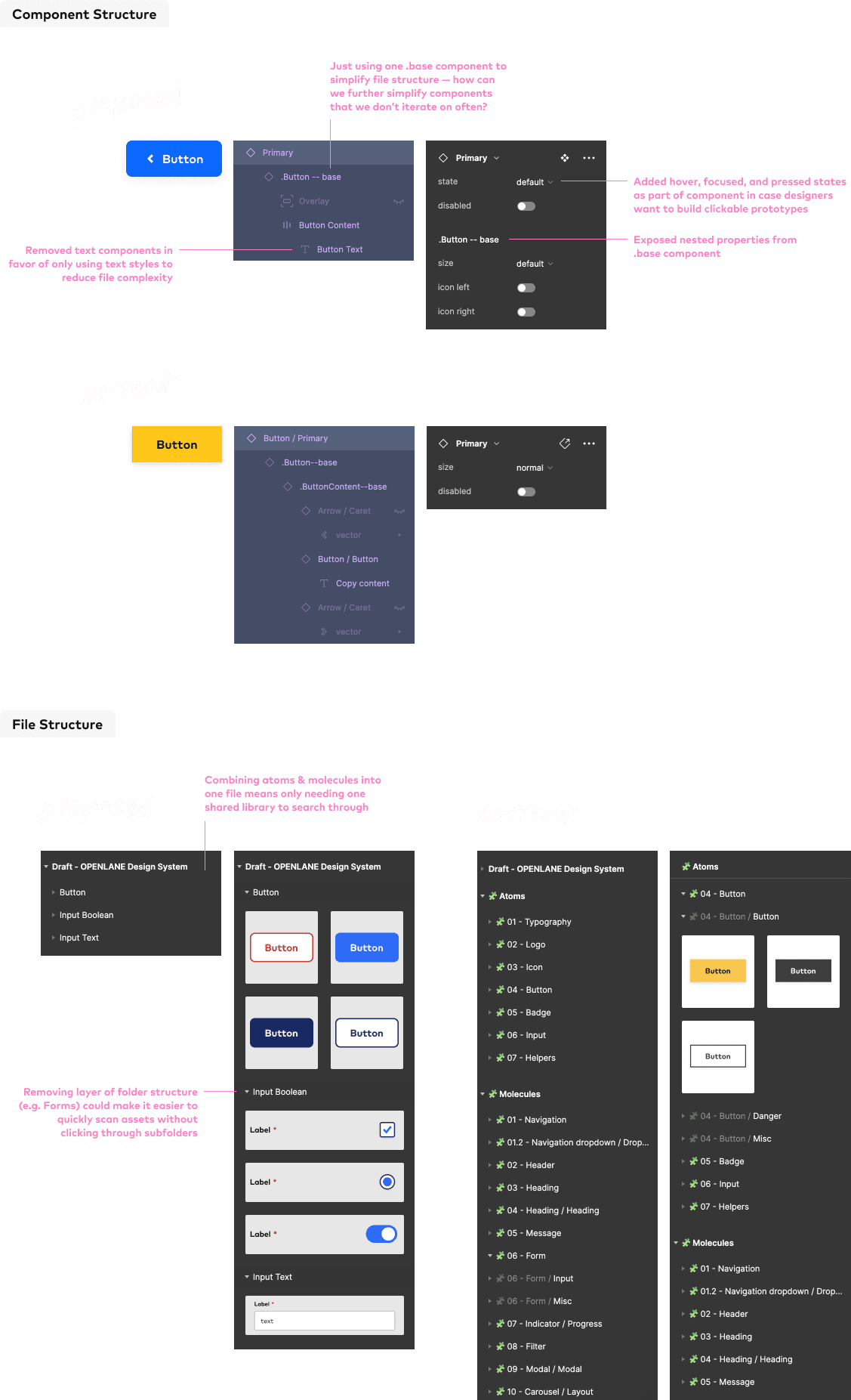
Establishing project goals
To address these issues, I proposed three main objectives to guide our rebranding work:
Optimize for design efficiency
Ensure WCAG AA accessibility
Improve documentation
I advocated that our design system should serve its primary users — the design team — first. This meant simplifying components and establishing cleaner file structures. And I didn't want to just swap in new brand colors; I saw this as a golden opportunity to make thoughtful improvements to accessibility and documentation.
The team bought into this approach, and these goals guided our work throughout the rebrand.
03
Design foundations
Rebranding the color palette
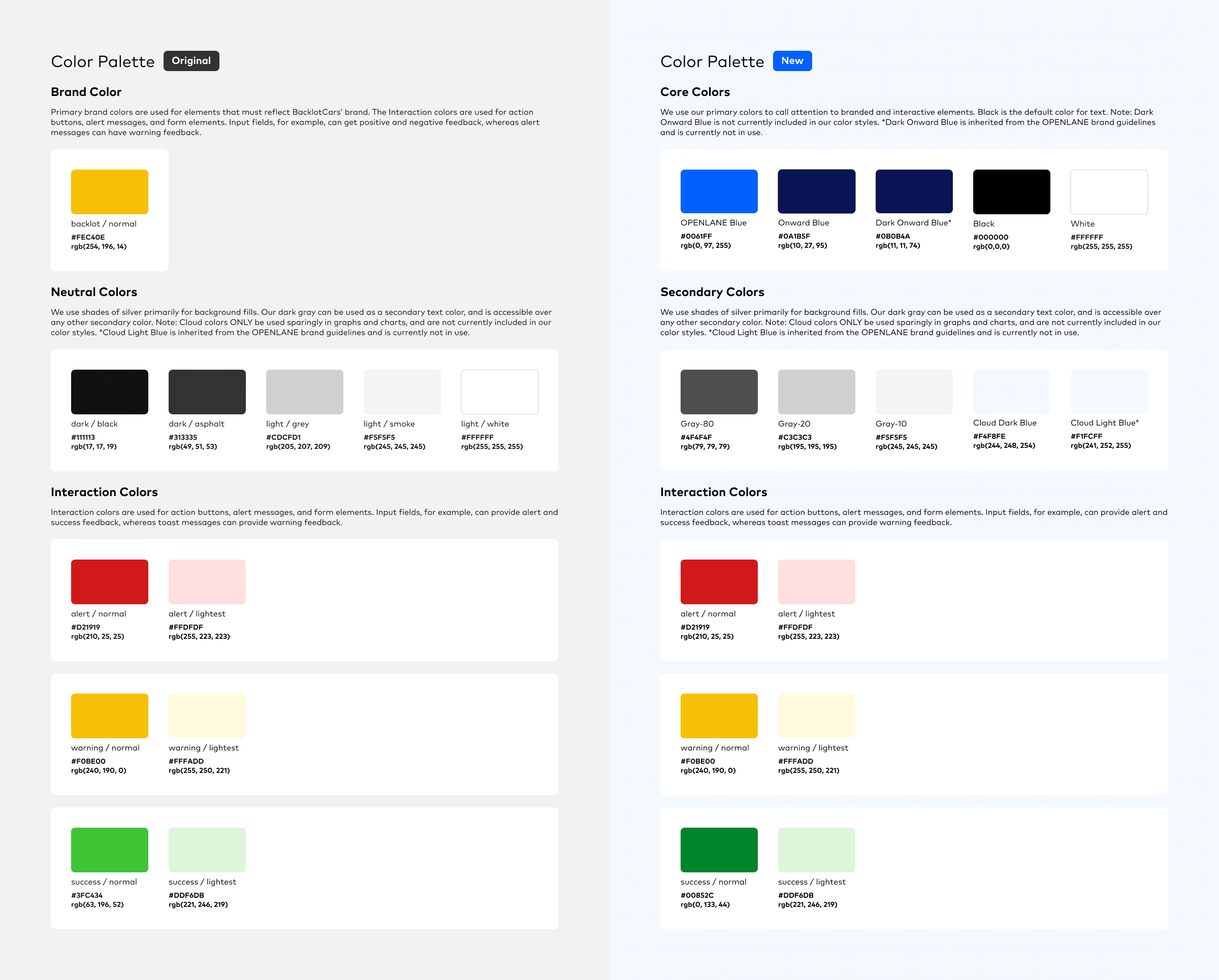
I started out by updating our color palette. Working from the new OPENLANE brand guidelines, I developed a simplified palette that could be easily implemented across our product.
To address color contrast issues, I took this opportunity to adjust our interaction colors and introduced new shades of gray to offer more neutral, WCAG-compliant color pairings.
Prioritizing functional typography
As I worked on updating color, the two other UI designers were making decisions around typography. Our existing font was more legible and functional for the product than what made sense for the marketing site, so they got approval from the brand team to keep using our existing typography styles. This decision saved us a ton of time and prioritized an efficient, familiar user experience.
Defining missing input states
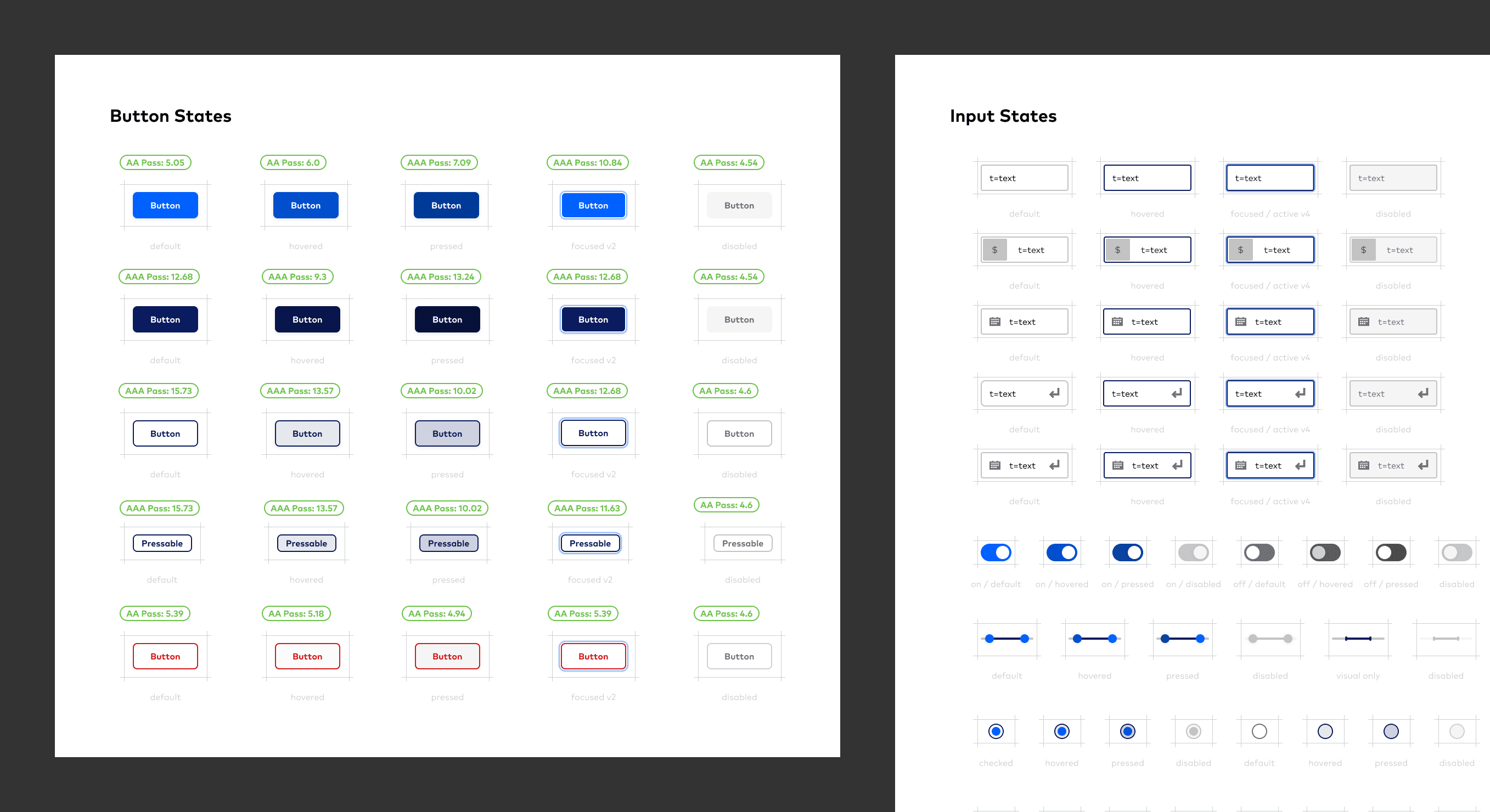
With the first iteration of our new color palette complete, I began building foundational elements of our new design system: buttons, checkboxes, radio buttons, toggle switches, and text fields.
One major piece missing from the initial design system was documentation around input states, so I was thoughtful about creating consistent patterns for hovered, pressed, active, and disabled states early in the redesign process.
Standardizing documentation
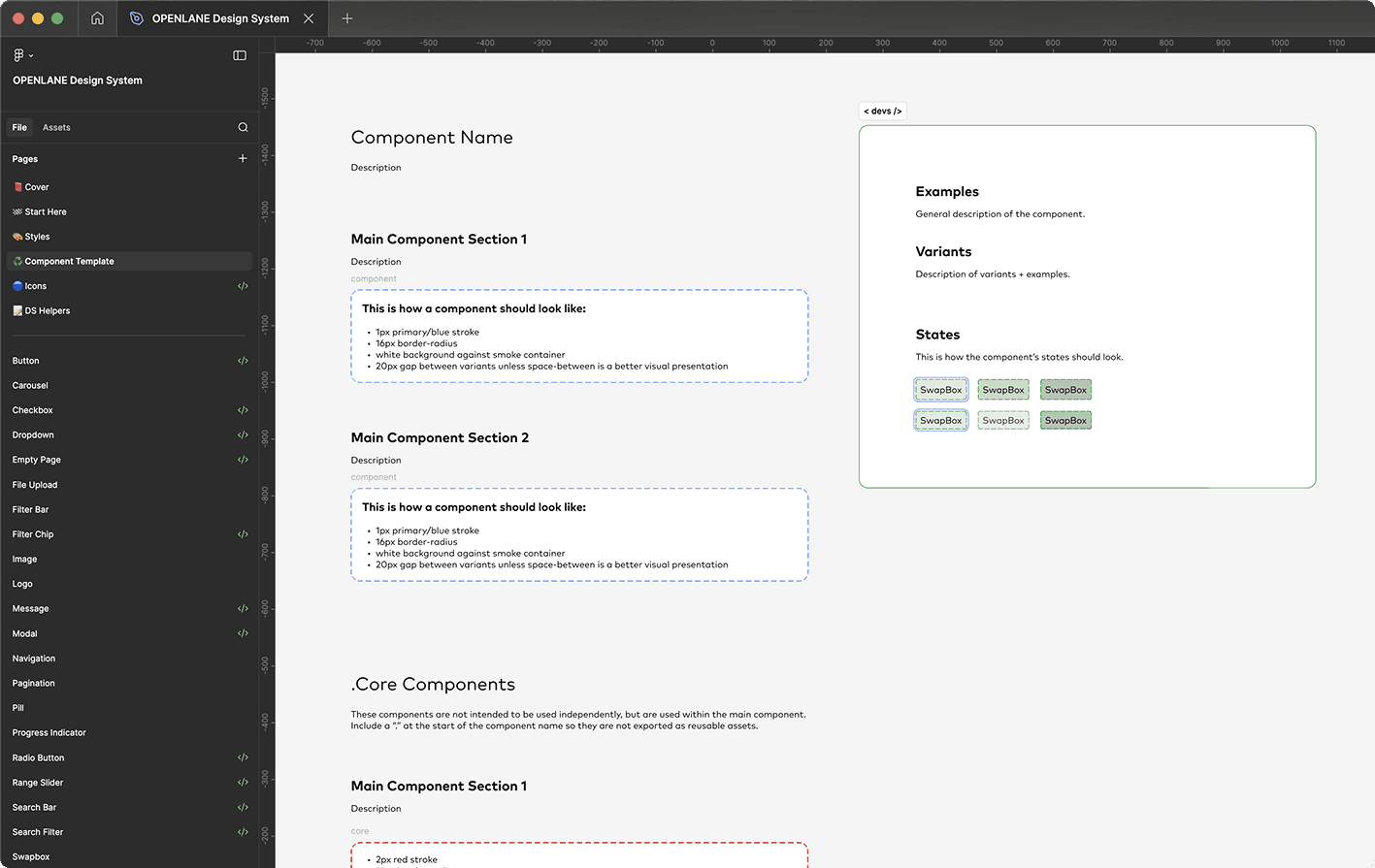
With our style updates and basic inputs defined, we were almost ready to start building more complex components. But first, we needed to align on how to organize and document this new file. Looking to future-proof our system, we agreed to move each component to a separate page, organized alphabetically. This would allow us to easily modify, document, and expand our library as needed.
Next, we worked together to develop a component template page to ensure consistent documentation. We included a <devs/> section specifically designed to communicate implementation requirements. This section would be marked “ready for development” to communicate when component updates were finalized.
04
Components
Divide & conquer
With foundations established, we divided up the workload to rebuild our more complex components. We gathered input from across the product team, conducted additional research, and made adjustments as we started to see how our new atoms worked in context.
Research-informed vehicle cards
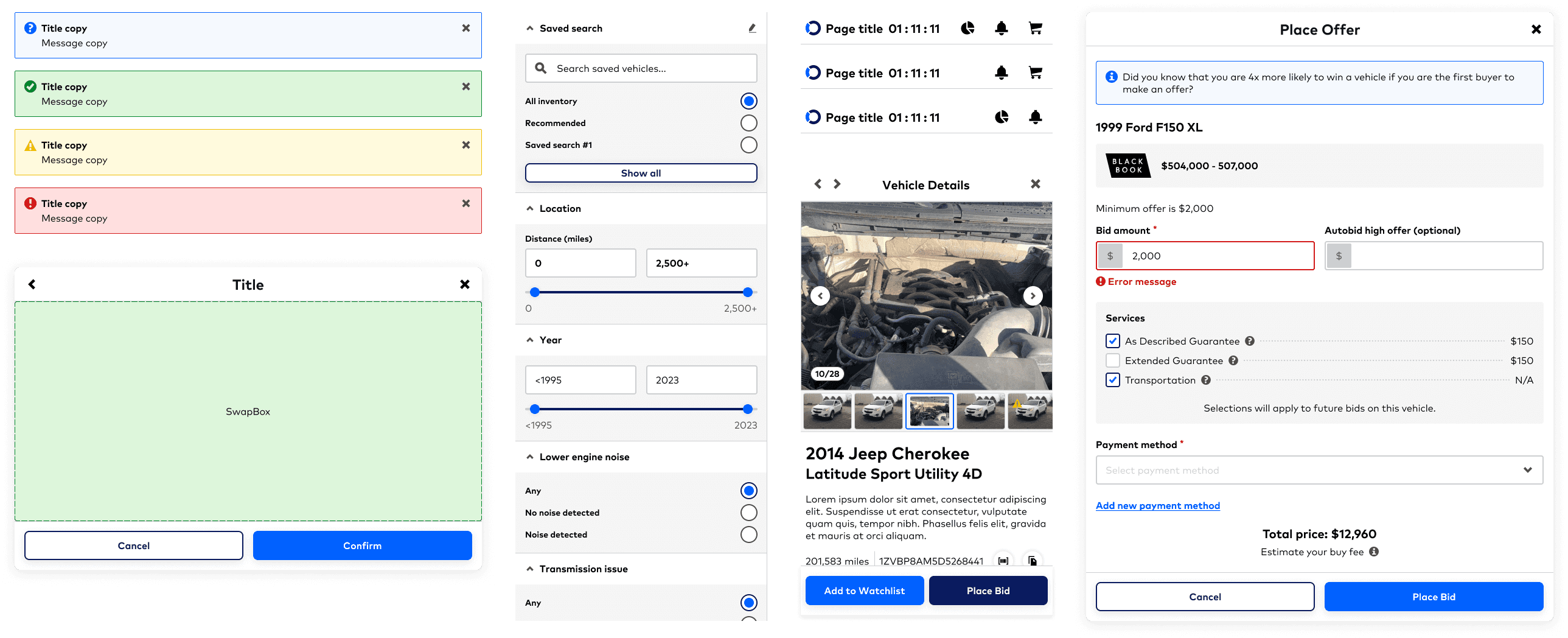
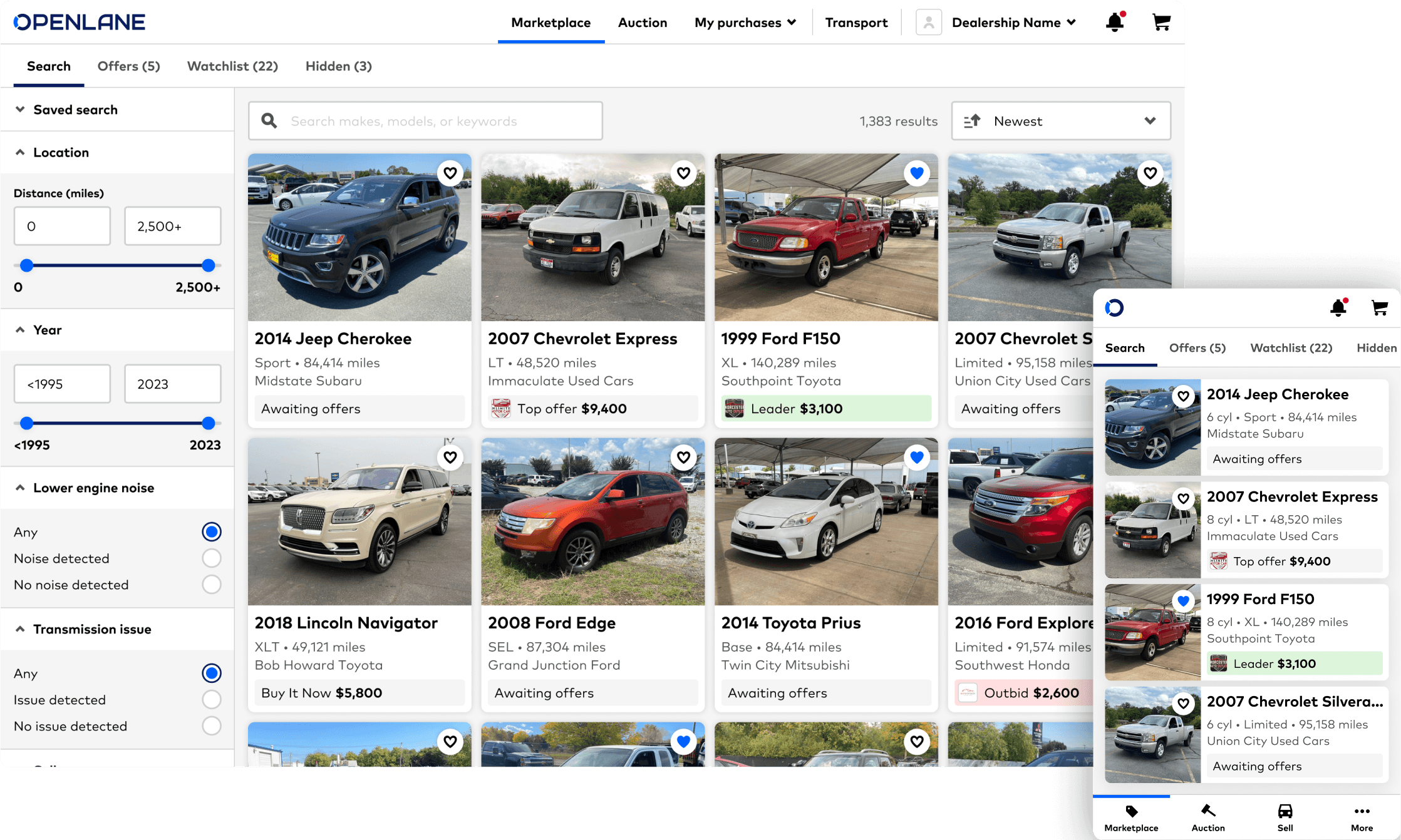
As we built more complex components, we quickly realized our vehicle card component would require the most attention. This complex component was a primary touchpoint for user engagement, but it had not been standardized in the existing design system. As a result, dozens of inconsistent variants were in use across the platform.
To inform our redesign, I conducted a competitive analysis to understand how other brands were approaching card content, layout, and functionality. Based on those learnings, we put together a few design variations and scheduled interviews with five power users to get their thoughts.
From their feedback, we developed a simplified card layout that provided buyers with just enough context to decide if it was worth digging deeper, without overwhelming them with information.
05
Launch & outcomes
By October 2023, we had rebuilt 30+ components with improved accessibility, comprehensive documentation, and scalable foundations for a unified brand experience. Our rebranded marketplace went live in the fall of 2023.
The rebrand contributed to OPENLANE's successful 2023 performance. CEO Peter Kelly specifically cited "brand simplification work" alongside innovation and technology investments as driving positive impacts, with the company achieving 10% marketplace volume growth, 8% revenue increase, and 18% EBITDA growth. This momentum continued into 2024, with OPENLANE reporting seven consecutive quarters of year-over-year volume growth.
06
Retrospective
This project was my first opportunity to evaluate and rethink a design system as a whole. This meant forming my own informed opinions about what makes systems effective — and advocating for them.
While being the newest member of a 3-person team in an unfamiliar industry was challenging, my fresh perspective became an unexpected advantage. I was able to assess the design system and product without the baggage of “that's how we've always done it," and use the rebrand as an opportunity to address systemic issues.
What went well
Quickly earned team trust and buy-in to address foundational issues
Established documentation patterns and component structure early on
Capitalized on the rebrand as an opportunity to improve consistency, accessibility, and designer efficiency
What I’d do differently
Dedicate time to user research early on to better understand what components or product areas needed the most attention
Built out the color scales more for additional UI flexibility
Run iterative user testing on filter bar and vehicle card updates